Project overview / Edenred
Turning a legacy B2B platform into a scalable product
A transformation of a business-critical benefits portal—from a difficult legacy service to a modular MVP that could evolve with customers and the organisation.
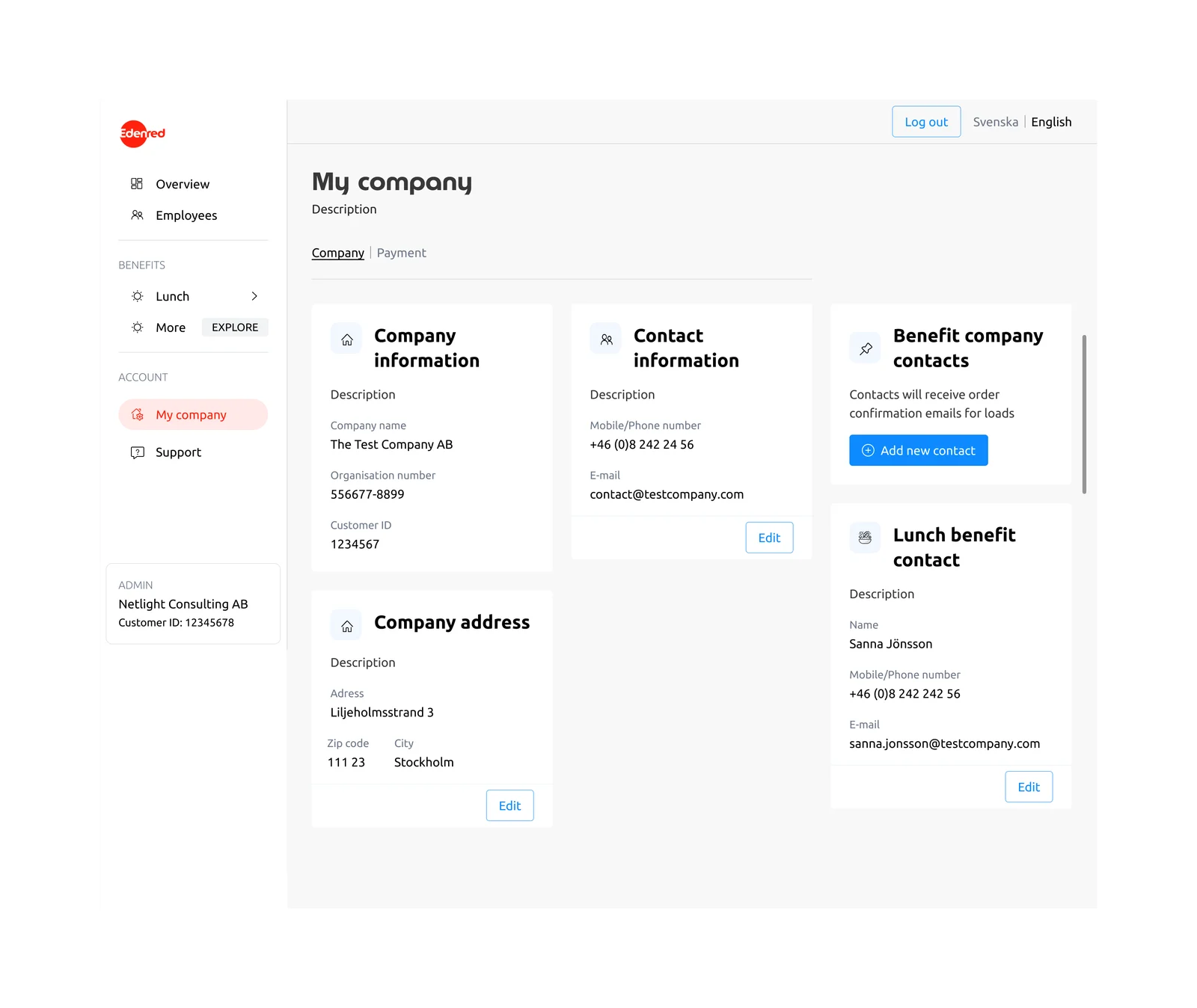
01 / Challenge
A core service that was difficult to serve yourself.
Customers struggled to complete important benefits-administration tasks in the legacy portal, increasing dependence on customer service. The platform was also difficult for product and development teams to extend.
The challenge combined customer usability, operational cost and scalability. Improving screens alone would not address the underlying product and technical complexity.
How might we make a complex B2B service easier to use, easier to support and easier to scale?
02 / My role
Lead the design transformation from direction to implementation.
I led the design transformation and carried most of the product-design work across research, framing, concepts, prototypes, testing and final interface design. I collaborated with another designer on the design system and was responsible for implementing it in the product.
Working closely with the product owner, I helped connect development with the wider product organisation. I influenced prioritisation, MVP scope and discussions about the business model and technical direction, collaborating with engineering, marketing, sales and customer service.
- Owned
- Design transformation, research synthesis, UX, interface design and design-system implementation
- Influenced
- MVP scope, product direction and technical foundation
- Collaborated
- Another designer on the design system; product owner, engineering and business teams on delivery
03 / Organisational enablement
Build UX capability around the product.
Transforming the portal also required a shared understanding of UX. I created and delivered internal UX education for a cross-functional audience spanning executive leadership, product, technology, marketing and sales. The sessions reached senior leadership, including the CEO, as well as the teams shaping and communicating the service.
Across two to three sessions, I connected user needs and business goals with discovery, research, MVP definition, validation and delivery. This helped bring research into planning earlier and created a shared language for broader collaboration around the customer experience.
to delivery teams
Shared product direction
UX education connected research, planning, MVP definition and delivery across the organisation.
04 / Process & approach
Simplify the product before asking it to scale.
- 01
Understand the service behind the interface
Customer and market research, stakeholder input and service knowledge exposed where customers needed support and where the organisation absorbed complexity.
- 02
Frame a smaller, stronger core
The portal was broken into modules and reduced to a focused MVP scope the team could validate and build.
- 03
Validate while the product moved
Concepts and prototypes were refined while the MVP developed. Continuous migration created a live learning loop rather than a single handover.
- 04
Create a shared delivery foundation
A design system aligned the rebrand with reusable patterns while product–engineering collaboration supported a more maintainable technical direction.
- DiscoverCustomer needs
- DefineShared strategy
- PrioritiseFocused MVP
- DevelopPrototype & test
- DeliverBuild & migrate
- LearnIterate in use
05 / Key design decisions
Turn transformation into manageable product choices.
06 / Deliverables
A product foundation the organisation could build on.
Product direction
- Customer and market research findings
- MVP framing and prioritisation
- Product and technical recommendations
Experience design
- Modular information architecture
- Core customer journeys and prototypes
- Tested portal interface
Delivery system
- Final UI for the MVP
- Collaboratively designed system implemented by Linnea
- Migration and iteration support
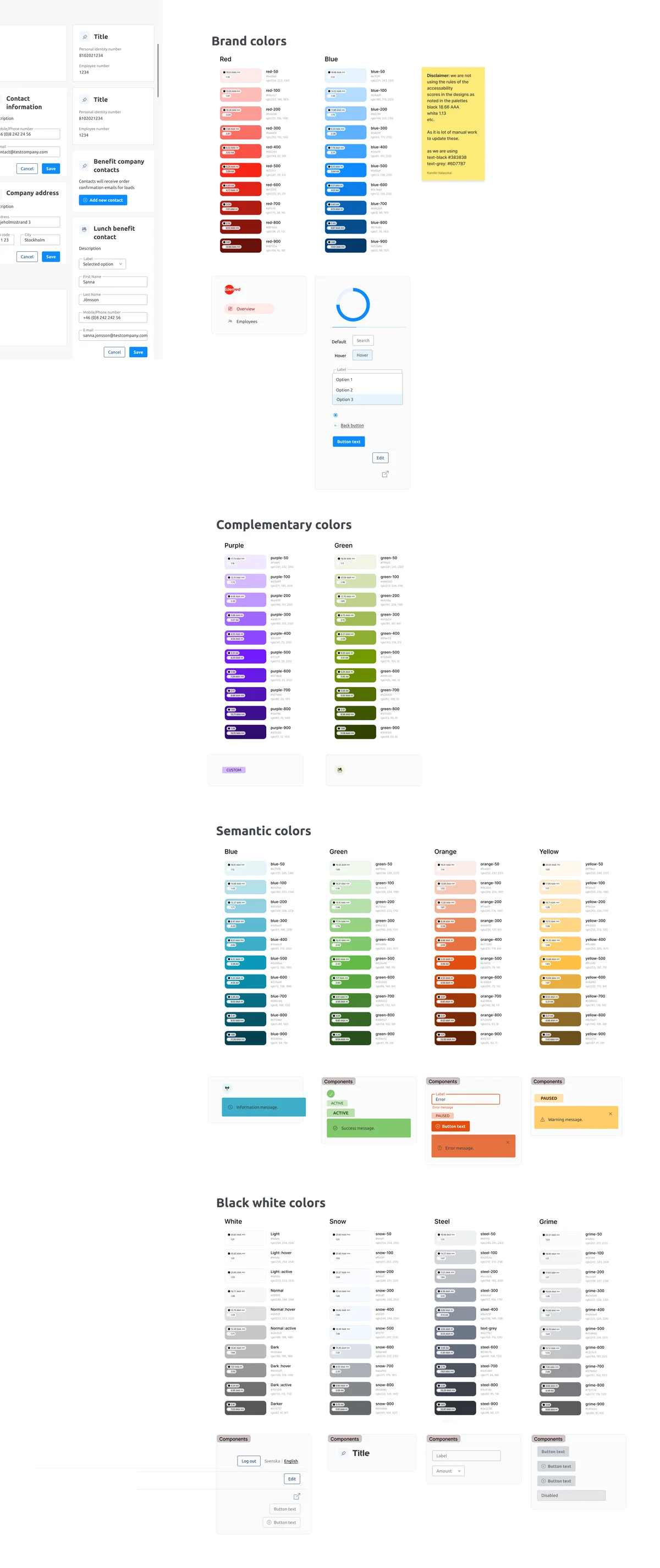
The design system was developed with another designer and implemented by Linnea in the product, linking the rebrand to reusable patterns and delivery.
Shared design · Direct implementation07 / Selected product evidence
A modular portal designed for self-service and growth.
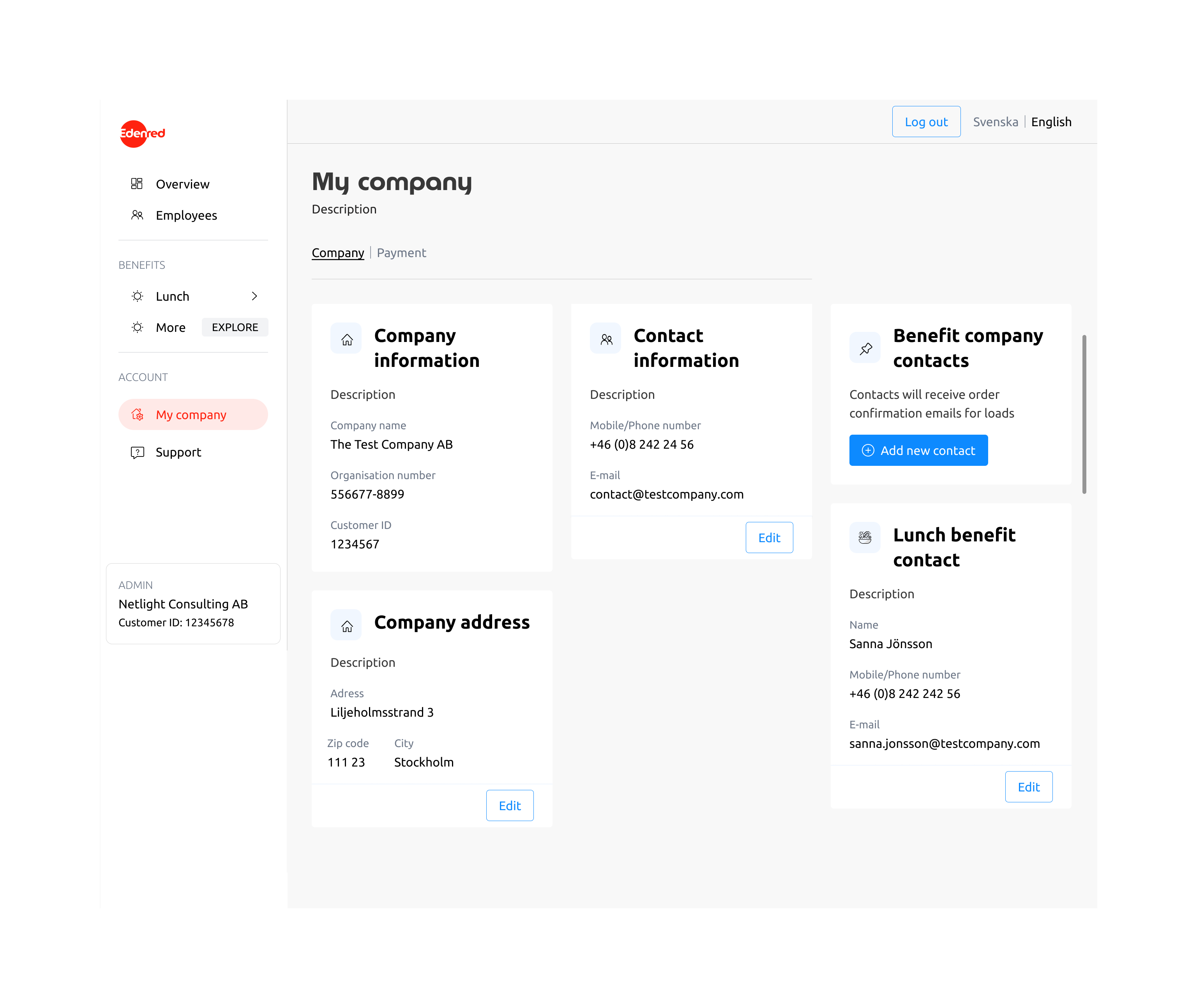
The MVP focused the portal on core customer tasks, organised the service into modules and established reusable patterns for continued development. Customers migrated continuously while the team refined the experience.
One selected product view is shown here as evidence of the resulting modular structure. The transformation story sits in the research, prioritisation and organisational work that made this interface possible.
08 / Impact
From a legacy portal to an evolving product.
Increased self-service and fewer customer-service enquiries were objectives; no numerical reduction is claimed without supporting data.
Customer impact
A focused MVP gave customers a clearer route through core benefits-administration tasks.
Business impact
The MVP launched and customers migrated continuously to the new platform.
Product & organisation impact
Research entered planning earlier, while a shared UX language, modular architecture and design-system foundation supported continued development.
09 / Reflection
What I took from this project
Transformation becomes practical when product scope, customer value, organisational understanding and delivery constraints are shaped together. Simplifying the first release created room for both learning and long-term ambition.